
VeloxChem Rinkevicius et al. (2020) is a Python-based open source quantum chemistry software for contemporary and future hardware architectures. It features interactive program access through Jupyter notebooks as well as massively parallel calculations in high-performance computing (HPC) environments.
VeloxChem offers modeling of complex molecular systems by means of force-field molecular dynamics and polarizable embedding in combination with user-friendly support for automatized solvation and force-field derivations. It is an ideal platform for building simulation workflows and data-driven research Gracia Trivino et al. (2025).
VeloxChem is education enabling, providing a means to explain and explore the theory underlying computational chemistry in a highly interactive manner Fransson et al. (2023). It is science enabling, providing a means for accelerated method development in quantum chemistry Hodecker et al. (2025).
This manual gives a description of the installation process and basic usage of VeloxChem. A more comprehensive view of the ample opportunities for Python software interactions is provided in the eChem book Fransson et al. (2022).
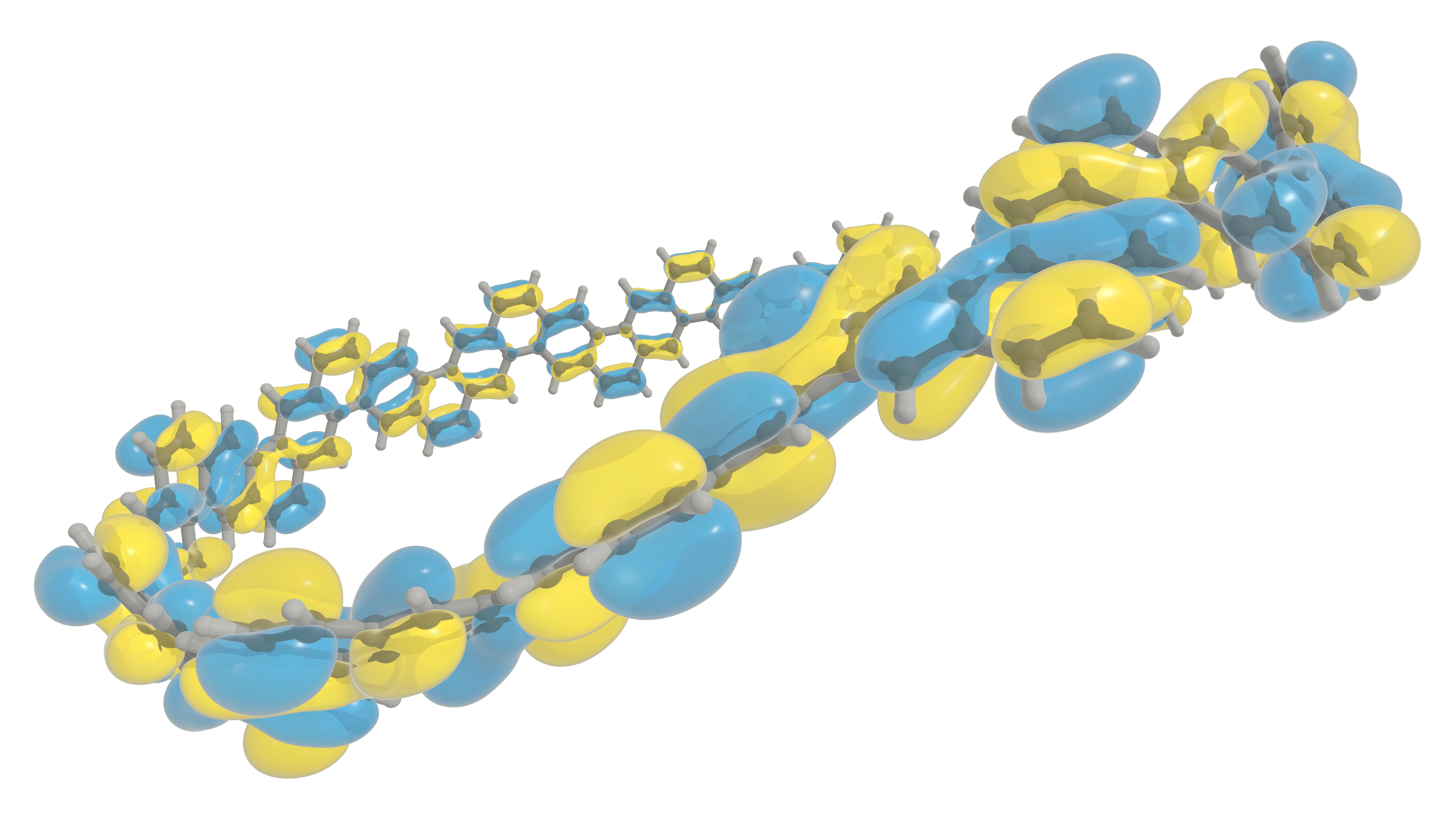
Selected functionalities
Kohn–Sham Density Functional Theory (DFT)
Time-dependent DFT (TDDFT)
Complex polarization propagator (CPP)
Potential energy surface (PES) exploration for ground and excited states
Optical (UV/vis) and X-ray absorption (XAS, XPS)
Two-photon absorption (TPA)
Classical methods
Molecular mechanics (MM)
Molecular dynamics (MD)
Localized properties (LoProp, RESP)
Empirical valence bond (EVB)
- Rinkevicius, Z., Li, X., Vahtras, O., Ahmadzadeh, K., Brand, M., Ringholm, M., List, N. H., Scheurer, M., Scott, M., Dreuw, A., & Norman, P. (2020). VeloxChem: A Python-driven density-functional theory program for spectroscopy simulations in high-performance computing environments. WIREs Comput. Mol. Sci., 10(5), e1457. 10.1002/wcms.1457
- de Gracia Trivino, J. A., Brumboiu, I. E., Carrasco-Busturia, D., Li, X., Li, C., Linares, M., Lindfeld, V., Rhee, Y. M., Rune, J., Van Hoorn, B., Norman, P., & Ahlquist, M. S. G. (2025). VeloxChem Quantum–Classical Interoperability for Modeling of Complex Molecular Systems. J. Phys. Chem. A, 129(32), 7575–7587. 10.1021/acs.jpca.5c03187
- Fransson, T., Delcey, M. G., Brumboiu, I. E., Hodecker, M., Li, X., Rinkevicius, Z., Dreuw, A., Rhee, Y. M., & Norman, P. (2023). eChem: A Notebook Exploration of Quantum Chemistry. J. Chem. Educ., 100(4), 1664–1671. 10.1021/acs.jchemed.2c01103
- Hodecker, M., Norman, P., & Brumboiu, I. E. (2025). eChem: Accelerated Method Development in Quantum Chemistry with Notebooks. Chem. Methods, 2500033. 10.1002/cmtd.202500033
- Fransson, T., Delcey, M., Brumboiu, I. E., Hodecker, M., Li, X., Rinkevicius, Z., Dreuw, A., Rhee, Y. M., & Norman, P. (2022). Computational Chemistry from Laptop to HPC: A notebook exploration of quantum chemistry. KTH Royal Institute of Technology. 10.30746/978-91-988114-0-7